EXOPLANETS • MULTIPLICITY
Worlds Without Number
Exoplanets and the Ancient Intuition of Innumerable Creations
Exoplanets and the Ancient Intuition of Innumerable Creations
Until 1995 we had no confirmed planets outside our own solar system. Today the number is in the thousands and rising fast. Some are rocky worlds in the right temperature range. Others are strange: hot Jupiters, super-Earths, planets orbiting pulsars, worlds with possible oceans of lava or water.
The Kepler and TESS missions, along with ground-based surveys, have shown that planets are common. Most stars appear to have at least one. The Milky Way alone may contain tens of billions of potentially habitable worlds. When you multiply by the hundreds of billions of galaxies, the total becomes almost incomprehensible.
We still have no direct evidence of life elsewhere. But the statistical argument has flipped. The question is no longer “is there anyone out there?” It is closer to “how many different kinds of life and intelligence are expressing themselves across the cosmos right now?”
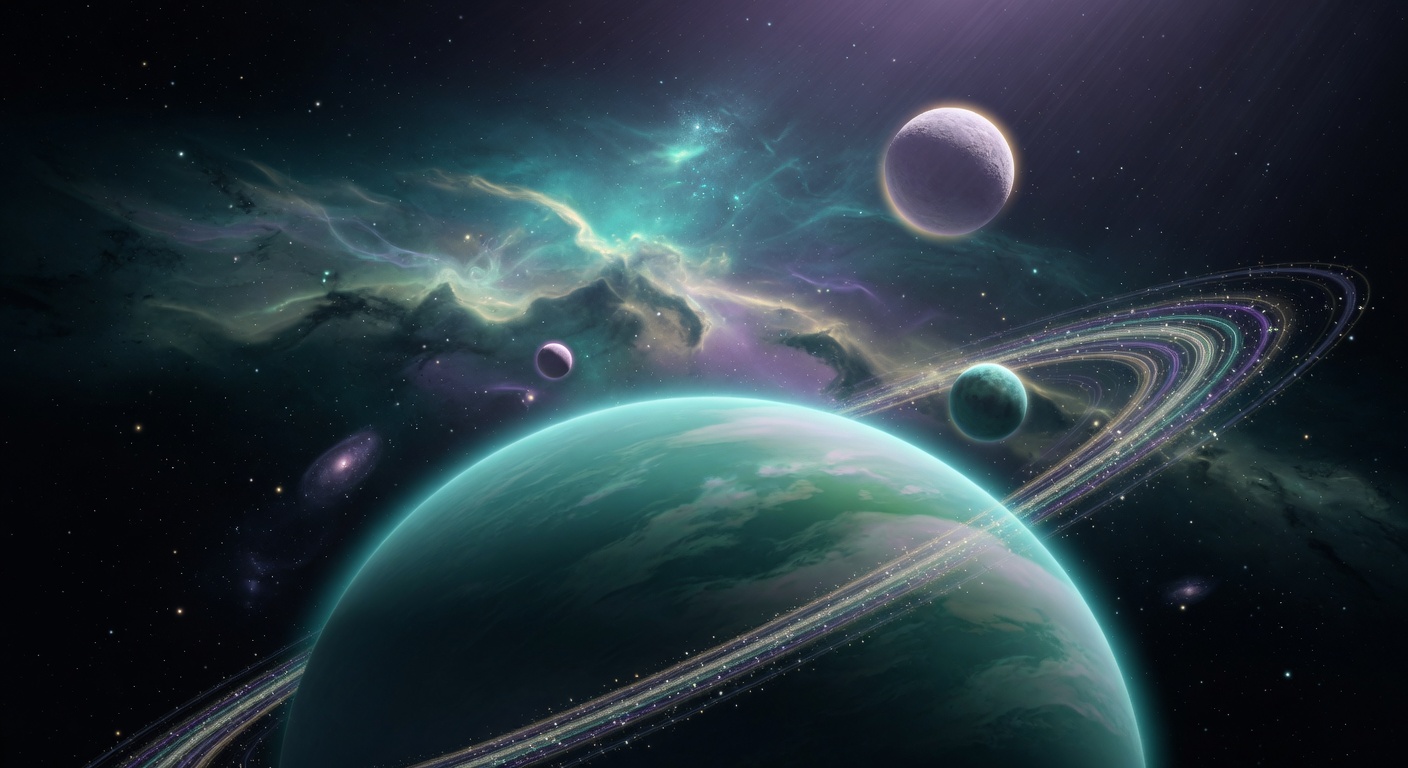
Some of the most intriguing candidates are “water worlds” — planets covered in deep global oceans with no dry land at all. Others orbit binary stars and experience two suns in their sky. The variety already discovered is far stranger than most early science fiction imagined.
The Puranic and Vedic literature did not treat our world as the only stage. They described 14 lokas (realms or planes), multiple levels of existence, and — crucially — innumerable Brahmandas, each with its own Brahma, its own cycle of creation and dissolution.
The scale was not merely large. It was conceptually infinite in a way that feels closer to the modern picture than the finite, Earth-centered cosmos of medieval Europe. Beings of many kinds moved between these worlds. The human story was one thread among countless others.
This was not presented as a scientific claim to be tested with instruments. It was a cosmological and spiritual orientation: the universe is generous, prolific, and not centered on us.
Living with the knowledge that there may be millions or billions of other worlds does something subtle but powerful to the human psyche.
“The discovery of other worlds does not make Earth less sacred. It makes the whole field of existence more sacred — and our responsibility to care for this particular garden both smaller and more precious at the same time.”
Until 1995, we had exactly zero confirmed planets orbiting other stars. Today the number exceeds 5,500 and is climbing rapidly. The statistical implication is that planets are common, and potentially habitable worlds may number in the billions within the Milky Way alone. Multiply by the hundreds of billions of galaxies, and the stage becomes almost inconceivably large.
The diversity already discovered is far stranger than early expectations. There are hot Jupiters orbiting in days, super-Earths in the habitable zone, planets with possible global oceans and no land, worlds in binary star systems experiencing two suns, and free-floating rogue planets ejected from their birth systems.
JWST and ground-based extremely large telescopes are now probing atmospheres for chemical disequilibria that could indicate life (oxygen + methane, for example). We are no longer asking “are there other worlds?” We are beginning to ask “what kinds of life might be expressing themselves out there right now?”
Some of the most intriguing candidates are “hycean” worlds — planets with thick hydrogen atmospheres over global liquid water oceans. These may be more common than Earth-like rocky planets and could be easier to characterize for biosignatures. The variety is already challenging our Earth-centric imagination.
The Puranas and Vedic literature did not treat our Earth or even our solar system as the only stage. They described 14 lokas (realms or planes of existence) and — crucially — ananta koti Brahmandas, innumerable cosmic eggs or universes, each with its own Brahma, its own cycle of creation and dissolution, its own population of beings.
Beings were understood to move between these worlds according to karma and dharma. The human story was one thread among countless others. This was not presented as a testable scientific hypothesis but as the background cosmological and spiritual orientation: the universe is generous, prolific, and not centered on us.
Modern science asks the famous question: if the numbers are so large and life had billions of years to arise, where is everybody? Proposed solutions range from “life is extraordinarily rare” to “technological civilizations are short-lived” to “they are here but we lack the perceptual or technological capacity to notice them.”
The traditional view assumes the cosmos is full and populated with many orders of being (devas, asuras, nagas, and countless others). It does not ask “where is everybody?” in the same anxious way. Instead it asks: what is our dharma in relation to this vast, populated field? How should we live when we are not the only story?
These countless worlds are not separate from the other mysteries we explore. In the deep breathing cosmos, the Puranic vision of innumerable Brahmandas finds a modern parallel in eternal inflation spawning bubble universes, each potentially with its own long cycle.
In the deep black hole exploration, some speculative models even suggest that black holes themselves could be gateways or seeds for new universes — nested worlds inside horizons.
The Rishis Who Measured the Stars cultivated patient, multi-generational observation of the sky while assuming a cosmos already full of other realms and cycles. Their precision was in service of understanding our small place inside a much larger, already-populated order.
On a clear night, spend 15–20 minutes simply looking up and repeatedly acknowledging: “This sky is shared with potentially billions of other worlds and forms of life.” Let the feeling of “we are not the only story” settle in the body without needing to resolve it into belief or disbelief.
Write a short letter to future generations (or to other possible beings) explaining what you are doing to care for this particular planet, knowing it may be one garden among many. The exercise clarifies responsibility without grandiosity.
When you feel loneliness or insignificance, practice a brief contemplation: “If there are other worlds with other beings facing their own suffering and wonder, how does that change the quality of my aloneness?” Many traditions treat this recognition as a direct support for compassion.
Discovering (or remembering) that we may not be alone does not make Earth less sacred. It makes the whole field of existence more sacred — and our responsibility to this particular garden both smaller in the cosmic scale and more precious because it is ours to tend right now.
The ancient texts assumed a populated, cyclic, vast cosmos and still insisted on dharma here and now. Modern exoplanet science is rapidly confirming the scale while leaving the question of other life open. Both perspectives invite the same mature stance: humility about our place, and full-hearted care for the world we actually inhabit.
“The discovery of other worlds does not make this one less holy. It makes the whole field of existence more holy — and our work here both smaller and more urgent at the same time.”